
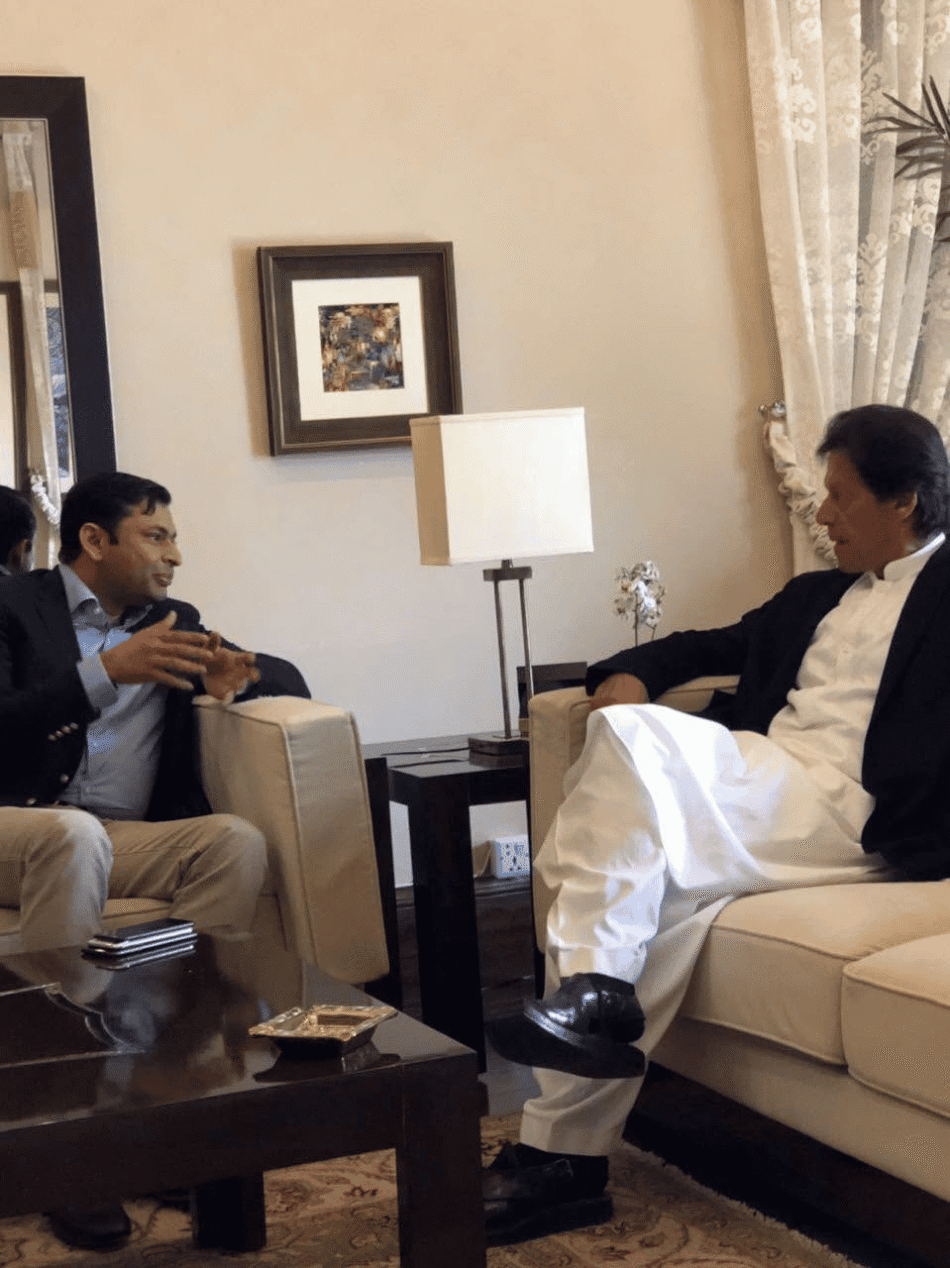
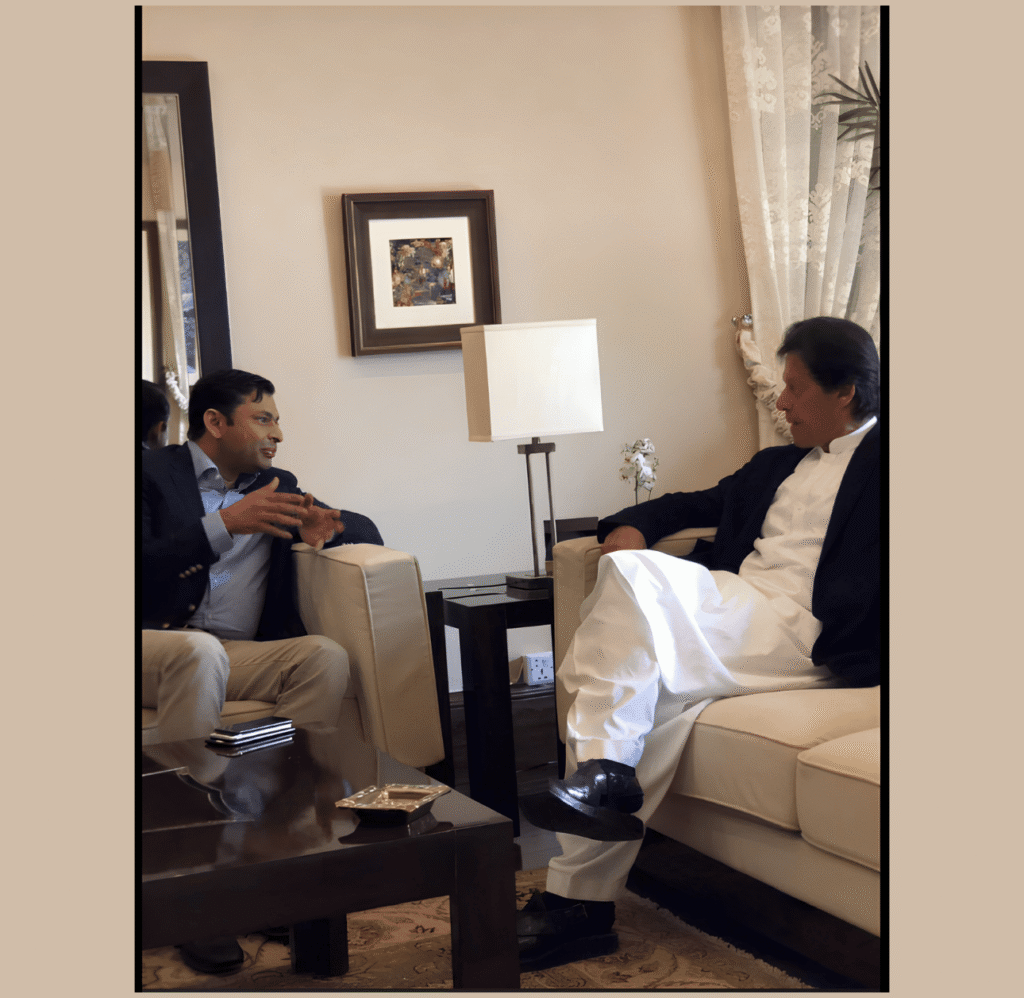
I had the honour of meeting the Prime Minister of Pakistan, Imran Khan, to discuss an issue that is very close to my heart: how Pakistan can attract greater foreign direct investment and unlock its immense economic potential?
As someone who has spent years in the Gulf’s investment and advisory landscape, I shared my perspective on what international capital looks for before it commits to a market — policy continuity, ease of repatriation, transparent regulation, and institutions that outlast political cycles. We spoke about the role Pakistan’s overseas community can play, not merely as a source of remittances, but as a bridge of capital, expertise, and credibility connecting Pakistan to global investors.
What struck me most in that conversation was the seriousness with which the question was being asked at the highest level of government: not *whether* Pakistan deserves investment — it plainly does, with its young population, strategic location, and entrepreneurial energy — but *how* to build the confidence that turns interest into commitment.
Some of the themes we touched upon remain, in my view, as relevant today as they were then:
Consistency over incentives.
Tax holidays attract attention; predictable policy attracts capital. Investors can price risk, but they cannot price uncertainty.
The diaspora as first movers.
Overseas Pakistanis, particularly in the UAE and the wider Gulf, are natural early investors. When they commit capital and succeed, institutional investors follow.
Special economic zones done properly.
Infrastructure, single-window facilitation, and genuine autonomy — not zones in name only.
Protecting the investor after the investment.
Dispute resolution, contract enforcement, and repatriation of profits matter more to boardrooms than headline growth figures.
Years on, I remain convinced that Pakistan’s fundamentals justify far greater international investment than it currently receives. The conversation that day reinforced something I have always believed: the distance between Pakistan and prosperity is not a lack of potential — it is a matter of trust, and trust is built through consistency.
It was a privilege to contribute my thoughts to that discussion, and it remains one of the most memorable conversations of my professional life.


